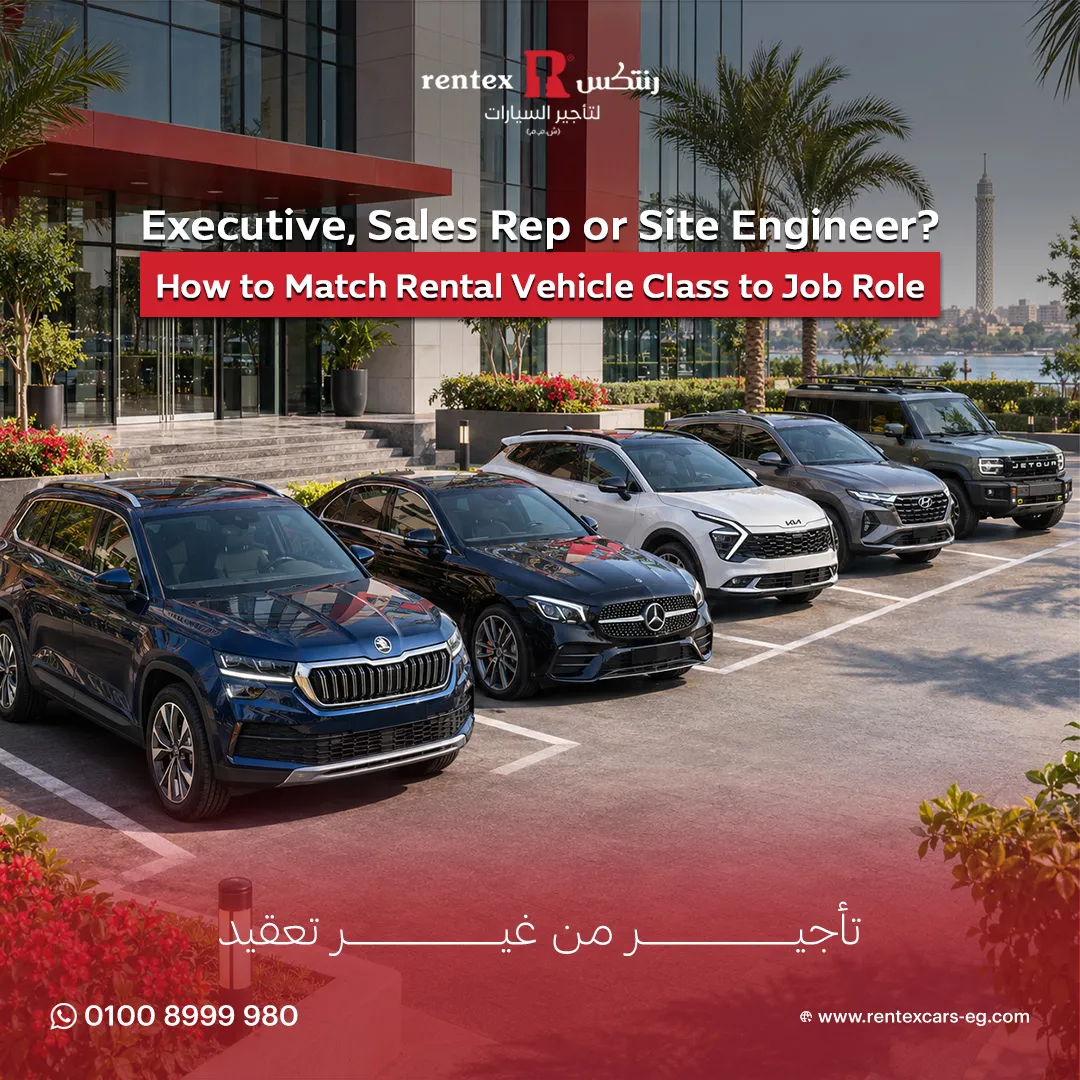
Choose a rental vehicle class by job role based on the trips employees make, the people and equipment they carry, and the roads and parking they encounter.
Start with the smallest category that meets the recurring requirements for space, comfort and access.
Move up a category when regular trips require more passenger room, usable cargo space or specific vehicle capabilities. Confirm those capabilities and permitted use before booking.
Start with the trips every vehicle must handle
Corporate rental vehicle selection starts with a trip profile. Ask employees or their managers to describe a typical week and the busiest day they reasonably expect. Record what the vehicle needs to carry on those trips and which requirements occur together. A car that fits a team of four on Monday and four equipment cases on Tuesday may still be too small on Wednesday if both travel together.
| Selection criterion | What to record before choosing a class |
| Trip frequency and distance | Stops per day, usual round-trip distance and the split between city driving and longer routes. Frequent short stops make parking and easy entry more important. Longer journeys give seat comfort greater weight. |
| Passenger count | The usual and maximum number travelling, including the driver. Check rear-seat space and access when colleagues or clients regularly ride along. |
| Luggage and equipment | The number, dimensions and loaded weight of bags or cases. Check the boot opening and usable space with the seats required for that trip in use. |
| Parking and access | Where employees park at offices, client premises and sites. Record ramp angles, narrow entrances, height limits, road surfaces and any site entry rules that affect vehicle choice. |
| Comfort | Time spent in the vehicle, rear-seat needs and exposure to frequent stops or long journeys. Specify essentials such as air conditioning that needs to serve both front and rear passengers. |
| Expected mileage | Estimate typical and peak monthly kilometres, including repeat visits and intercity travel. Give procurement both figures so it can compare mileage allowances and forecast excess charges. |
HR can define employee and passenger needs, operations can confirm the routes and loads, and procurement can turn those requirements into a specification suppliers can quote. Mark each item as essential or preferred. A minimum boot opening for an instrument case is essential when that case travels every week. A particular trim level may be a preference unless it supplies a required feature.
Executives: Match the vehicle to passengers and luggage
Typical executive trips include airport transfers, meetings between offices and travel with visiting clients. For executive car rental, start with who rides in the car. If the executive usually drives alone to meetings, a sedan with suitable parking dimensions and a comfortable driving position may cover the week. If colleagues or guests regularly travel in the rear, check their legroom, ease of entry and air-conditioning coverage.
A larger or higher-spec sedan may be justified when rear-seat comfort matters on frequent long journeys. A crossover or SUV may be worth comparing if several passengers routinely travel with large suitcases. Check the usable luggage space with every required seat occupied. The Rentex fleet listings show sedans, crossovers and SUVs as categories to compare. Request confirmation for the category, specification and rental dates you need.
Sales representatives: Prioritise the work between stops
Rental cars for sales teams often cover several appointments in a day, with repeated parking, loading and unloading.
For a representative making solo visits around Greater Cairo with a laptop and a small sample bag, a compact sedan is a practical starting point. Check whether the driver can manoeuvre and park easily at typical destinations and load the items needed at each stop without rearranging the boot.
A representative who regularly travels between governorates with a colleague and several demonstration cases may benefit from a roomier sedan or a crossover. Compare seat comfort over a full travel day, the largest case against the cargo opening and the expected monthly kilometres against the quoted allowance. If the bulkier load occurs only at occasional events, record those dates separately so procurement can compare a larger booking for those trips with a higher class for the whole term.
Site engineers: Check the approach road and the load
Rental vehicles for site engineers may serve anything from a coordination meeting at a paved site office to inspections involving instruments, protective equipment and a crew. An engineer who travels alone on paved roads with a laptop and a small inspection kit may be well served by a sedan.
A team carrying several people and bulky cases may need a crossover or SUV, provided the offered vehicle can carry the load and is approved for the route.
Ask operations to describe the final stretch of road, including any gravel, ruts, steep ramps or temporary access roads. Check the offered vehicle’s ground clearance, permissible payload, cargo dimensions and suitable ways to secure equipment.
Check the combined weight of occupants, equipment and luggage against the limit for that model and configuration. For an unpaved approach, confirm suitability against the vehicle specifications, secure the site operator’s approval where required and get the rental supplier’s permitted-use terms in writing. If any requirement cannot be met, consider arranging a transfer from an approved pickup point.
Compare requirements by role and route
| Role | Typical trip | Essential features | Category to consider | Detail to verify |
| Executive | Airport pickup with visiting colleagues and suitcases | Easy rear entry, comfortable seating and luggage space with all required seats in use | Sedan or SUV | Suitcase fit and rear-seat space in the offered configuration |
| Sales representative | Several city visits with a laptop and sample bag | Easy parking, accessible boot and suitable driving position | Compact sedan | Vehicle footprint and mileage allowance |
| Sales representative | Intercity demonstrations with a colleague and several cases | Comfortable seating and cargo access for the largest case | Roomier sedan or crossover | Cargo opening and usable space with the required seats occupied |
| Site engineer | Coordination meetings via paved access roads | Space for inspection kit and any required employer safety features | Sedan | Site admission requirements and relevant vehicle features |
| Site engineer | Field inspections with passengers, instruments and an unpaved approach | Adequate clearance and payload, plus a way to secure the equipment | Crossover or SUV, subject to checks | Model-specific capability and written permission for the route and use |
Two employees with the same title may need different classes. A site engineer based at a paved project office may make several short trips with a small kit. Another may drive fewer days but regularly carry two colleagues and survey cases along a rough approach. Use the job title to organise requests and the trip profile to select the vehicle.
Build a vehicle request the supplier can quote
Prepare one line per role and trip profile. For each line, include the number of vehicles and the dates they are needed. Add enough detail for the supplier to propose an equivalent category if the preferred model is unavailable.
- Operating area. List base locations, governorates, common destinations and expected pickup or delivery points.
- Road surface and access. Describe paved, gravel or unpaved sections, tight turns, gradients and parking height or width limits.
- Site permissions. Record any site entry approval, vehicle eligibility or route restrictions and ask which uses the rental agreement permits.
- Equipment dimensions and weight. Give the largest item’s length, width and height, the number of pieces, the combined loaded weight and any securing requirements.
- Passengers. State the usual and maximum number, including the driver, and whether equipment or luggage travels with them.
- Mileage. Provide typical and peak monthly kilometres and any planned long trips.
- Employer safety requirements. List mandatory vehicle features, onboard equipment or inspection records the employer or site requires.
Use the Rentex contact page to ask how to share route and equipment details. Request a quote that names the category offered and identifies any specifications, site uses or dates the supplier still needs to confirm.
Frequently asked questions
Is an economy car suitable for frequent city sales visits?
An economy car can suit frequent city visits when the representative usually travels alone, carries a small kit and can park easily at appointments. Check how the offered vehicle handles the busiest day, including extra samples or an occasional colleague. Compare the quoted mileage allowance with expected monthly driving, since a schedule of short trips can add up when the employee makes several stops each day. corporate vehicle selection by job role
What vehicle category should we choose for client meetings?
A sedan is a sensible category to consider when the trip is mainly to a meeting and the passengers have little luggage. If the employee also collects visiting clients from the airport, check the exact passenger and bag counts before choosing. A roomier sedan, crossover or SUV may suit that combined itinerary if it provides enough rear-seat comfort and usable luggage space with every required seat occupied.
Can a rental vehicle carry tools or survey equipment to a project site?
Ask the rental provider to confirm whether the agreement permits the equipment and the proposed site use. Give the dimensions and total loaded weight of the cases and say how many people travel with them. Check the offered vehicle’s payload, cargo opening and equipment securing options. Confirm site entry requirements and whether the vehicle is suitable and permitted for any unpaved section of the route.
How do we choose by category when a specific model is unavailable?
Give the supplier a list of minimum requirements and ask for an available model that meets them. Include seats, luggage or case dimensions, parking limits and any mandatory safety features. Where the trip depends on payload or ground clearance, ask for the specifications of the exact vehicle proposed. Confirm which features are part of the quote and ask how the supplier will check equivalence if it proposes a substitute. corporate vehicle selection by job role
Does a site engineer automatically need an SUV?
A site engineer can use a sedan when the route, site rules, passenger count and equipment load fit that vehicle. corporate vehicle selection by job role
Consider a crossover or SUV when the route or the combined passenger and equipment load requires capabilities the sedan cannot provide. Check those capabilities for the exact model and configuration, and confirm that the site operator and rental agreement allow the vehicle on the proposed route.
How should procurement estimate mileage for each vehicle class?
Start with a representative week or month of trips for each role. Multiply recurring journeys by their typical round-trip distance, then add intercity travel, recurring detours and known demand peaks.
Keep typical and peak monthly estimates separate. Give both figures to the supplier and ask how the quoted mileage allowance is measured and billed, especially when several employees share a vehicle or a project is likely to change locations.
Request a corporate fleet quote based on actual trips
To choose a rental vehicle class by job role, give the supplier the trip requirements that determine whether a vehicle will work. Send Rentex Cars Egypt your roles, routes, passenger counts and equipment needs so it can confirm suitable vehicle categories and availability. Start with the Rentex corporate car rental enquiry form for vehicle types and quantities, then share your route and load requirements during follow-up.